Water damage repair in Salt Lake City
Drying stops the damage. Repair puts the house back. They are two different jobs, sometimes done by two different companies, and in Utah the repair half usually needs a licensed contractor: anything with a contracted value of $7,000 or more, and any plumbing or electrical work at all.
On this page
What gets repaired, in order
- The source. The pipe or water heater that failed, fixed by a licensed plumber. Utah law requires a licensed plumbing contractor for work on a plumbing system even on small jobs (Utah Code 58-55-305).
- A dry reading. Before anything gets closed up, the framing and subfloor should read dry on a moisture meter. New drywall over a wet stud is how a water job turns into a mold job.
- Drywall and insulation. Flood-cut walls get new insulation and drywall, then texture and paint. Matching an old texture is the part people underestimate.
- Flooring. Carpet and pad are usually replaced. Hardwood can sometimes be dried flat; engineered and laminate floors often can't. Fixr lists water damage at $500 to $4,500 for a bathroom and $1,750 to $8,000 for a kitchen.
- Cabinets and trim. Particleboard cabinet boxes that swelled don't go back. Solid wood often does.
Basements are the big repair here
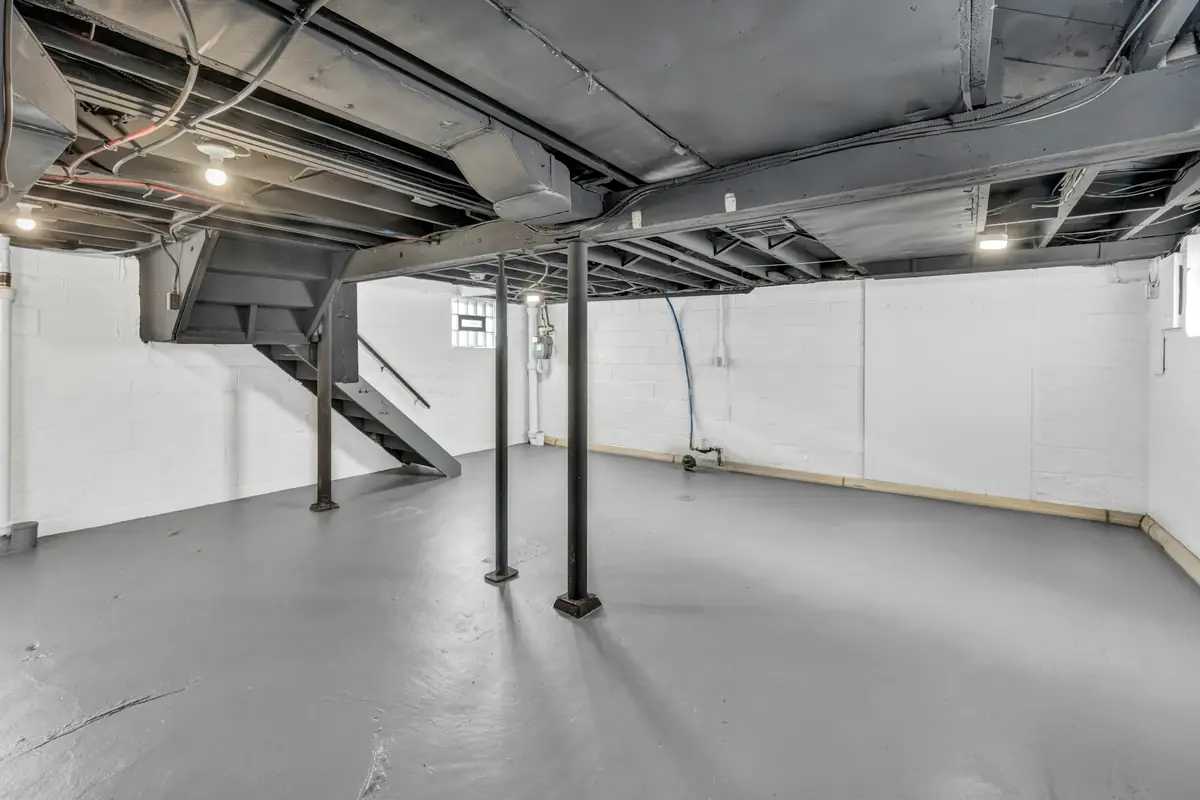
Fixr puts basement water damage at $2,000 to $85,000, and the spread is mostly about what was down there. An unfinished basement with a concrete floor is a cleanup. A finished one with carpet and a bedroom and a bathroom is a remodel. Many basements on the east side were finished decades after the house was built, sometimes without permits, so the repair can turn up wiring or framing that has to be brought up to code.
If the water came from a floor drain or a sewer backup, add disinfection before any rebuild, and ask your insurer about a backup endorsement before you assume it is covered. Basement flooding and sewer backups.
Licensing, in plain terms
Utah licenses contractors through the Division of Professional Licensing (DOPL). The exemption for small jobs covers repair work with a contracted value under $7,000, counting labor and materials together with any change orders. Even under that line, someone working without a license has to file an insurance affirmation with DOPL once a project passes $3,000, and plumbing or electrical work still needs the licensed trade. A water damage rebuild can pass $7,000 quickly once flooring and cabinets are in the scope, so ask for the license number up front and check it at the DOPL lookup.
Keeping it from stalling
- Get one written scope that covers both drying and repair, or two scopes that clearly hand off to each other.
- Ask who pulls the permit if one is needed.
- If insurance is paying, send the adjuster the drying company's moisture logs before repair starts.
- Pick finishes early; flooring and cabinets are usually the longest wait.
Questions Salt Lake homeowners ask
Does the restoration company do the repairs too?
Some do, some don't. Many dry the house and hand off the rebuild to a general contractor. Ask before you sign, and if they rebuild, ask for their Utah contractor license number.
Do I need a permit to replace drywall after a leak?
Simple drywall and paint often don't. Plumbing and electrical work usually do, as does anything structural. Check with your city's building department; Salt Lake City and its suburbs each run their own.
Can I do the repairs myself?
Utah's licensing law exempts owners working on their own property. Plumbing on the water supply and electrical work are where homeowner repairs most often go wrong, so many people dry and demo with a company, then decide on the finish work.
Sources
- Utah Code 58-55-305, Exemptions from licensure (effective May 7, 2025; read 2026-10-29)
- Utah Division of Professional Licensing: Licensee Lookup and Verification (read 2026-10-29)
- Fixr: Water Damage Restoration Cost (updated January 31, 2025; read 2026-10-29)
- US EPA brief guide to mold and moisture in the home (updated February 18, 2026; read 2026-10-28)